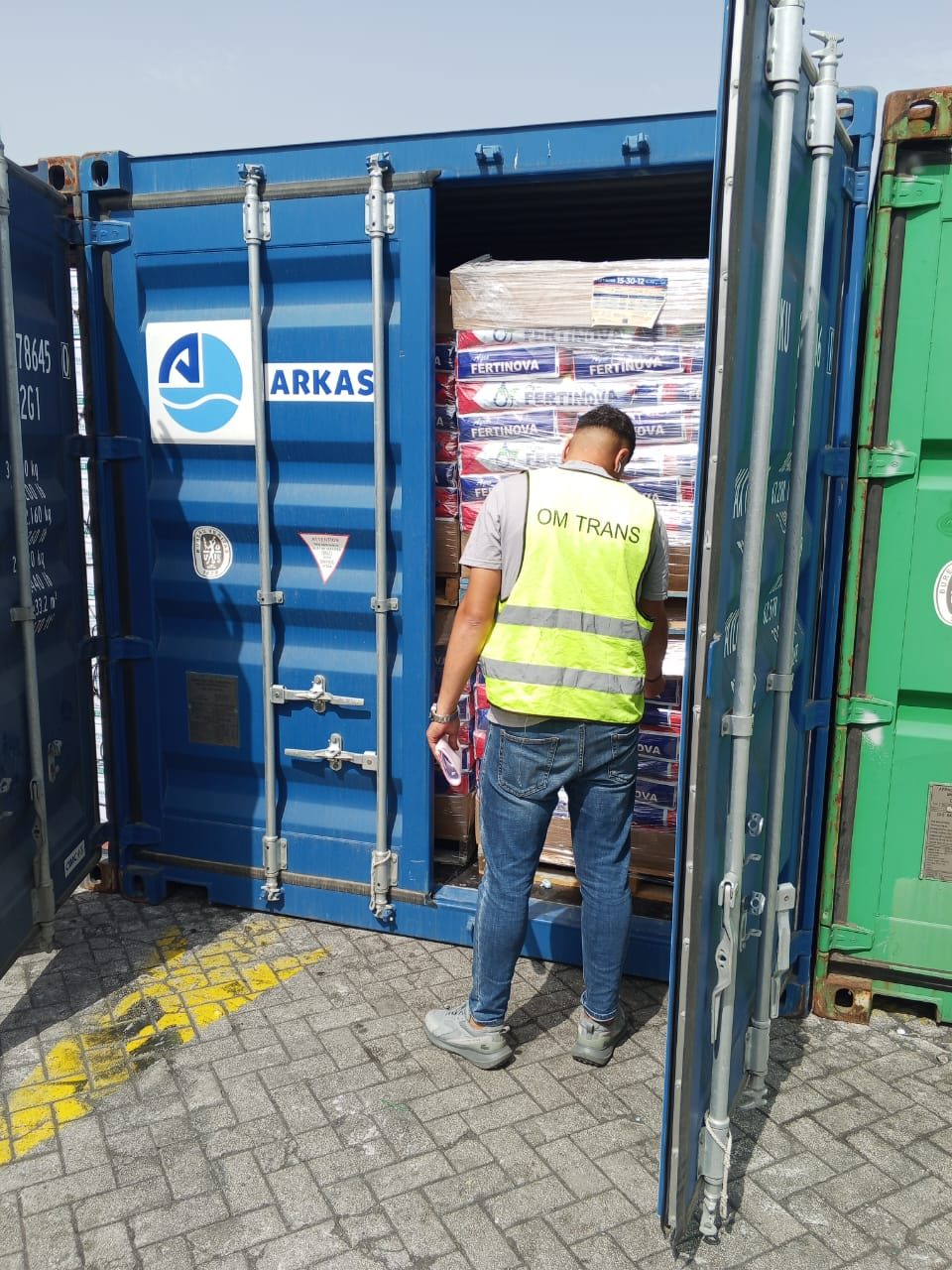
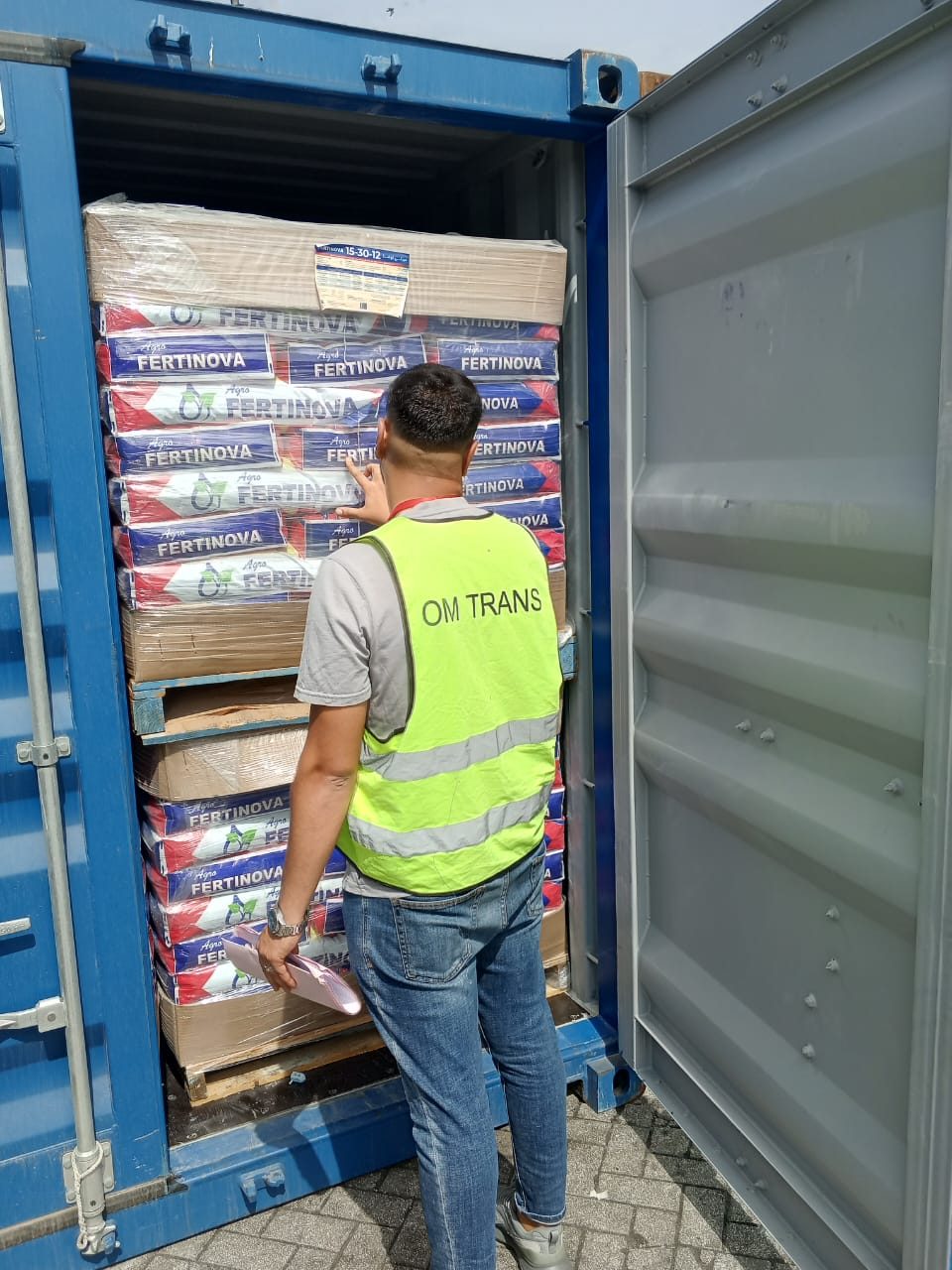
Green, orange or red channel: how is it decided?
Once the declaration is filed, the Algerian Customs IT system (ALCES)
assigns a channel to your container. The green channel releases the goods as soon as duties
are paid; orange triggers a documentary check; red leads to a physical inspection of the
container. What weighs most: the quality of the file and the track record of the importer
and of their customs broker — they strongly influence the channel chosen by ALCES.
A well-prepared file, filed by a broker with a clean record, leans towards green. One more
reason to choose your broker carefully.
Which documents are needed to clear goods?
The basic import file: commercial invoice domiciled with an approved
Algerian bank, packing list, bill of lading (or air waybill for air freight), certificate
of origin, trade register and tax card. Depending on the product, specific authorisations
may be added — which is precisely what our pre-alert study anticipates.
What is the difference between FCL and LCL?
With FCL you rent a whole container. With LCL (groupage), your goods
travel with other shipments and you pay only for your volume. FCL is faster and safer; LCL
is more economical for small volumes. We advise you according to your case when you request
a quote.
Lead times, storage: what happens if my container stays at the port?
On arrival, you have a few free days to remove your container, according
to the terms of your B/L. Beyond that, three meters run at the same time:
port storage
billed by the port on a progressive scale — the longer the container stays, the more each day
costs;
demurrage billed by the shipping line for the immobilisation of its container;
and the
customs penalty for exceeding the legal storage period, beyond 8 days from
the registration of the CRN on the ALCES platform. Containers exceeding the legal storage
periods are, where applicable, moved to dry ports under a Transfer Order — generating customs
penalties and related costs. A file prepared before berthing makes it possible to remove the
goods within the free period and pay none of this. That is exactly the purpose of our
pre-alert study —
write to us before you ship.
Ref.: Articles 71 and 76 of the Customs Code — periods
reduced from 15/21 days to 8 days by the 2025 Finance Act (Law no. 24-08 of 24/12/2024,
Art. 146 and 147); Articles 74 and 203 amended by the 2026 Finance Act (Law no. 25-17 of
14/12/2025).
What is the overstay penalty?
The legal storage period for a container is 8 days from the registration
of the CRN on the ALCES platform. Beyond that, the customs administration applies an overstay
penalty — which adds to the storage and demurrage that keep running, and exposes your goods
to being moved to a dry port under a Transfer Order. The total can become very heavy. The
golden rule: never wait for the ship to arrive to build your file — entrust us with your
documents from the moment of shipment.
Ref.: Articles 71 and 76 of the Customs Code (8-day periods —
2025 Finance Act, Art. 146 and 147). The penalty for exceeding the legal storage period is
DZD 50,000.
What is a Transfer Order (OT)?
The Transfer Order (OT) is the document under which your container is
moved from the port area to a dry port. It is a State decision to decongest saturated ports:
containers exceeding the legal storage period are moved to dry ports. The operation generates
a customs penalty and transfer costs, on top of dry-port storage. We track your container and
tell you where it is and what it is costing you —
write to us.
Ref.: Articles 74 and 203 of the Customs Code, amended by
the 2026 Finance Act — transfer orders are issued automatically by the customs information
system, and their execution is mandatory.
Why is the customs-broker mandate mandatory?
The Customs Code requires the customs broker to be officially mandated by
the importer or exporter to declare on their behalf. Without a signed mandate, no broker can
legally process your file — or even answer your tariff questions precisely. It is the very
first step:
download
the mandate here. You can file it yourself online on ALCES, or a member of our team will
assist you.
Legal basis: Articles 78 and 78 ter of the Customs Code
(Law no. 79-07, amended by Law no. 17-04 of 16 February 2017). Goods are declared by their
owner or by an approved customs broker acting under a mandate; failure to present the mandate
is a first-class customs offence (Art. 319 of the Customs Code), punishable by a fine.
What is bank domiciliation and is it mandatory?
For most imports intended for resale or production, the invoice must be
domiciled with an approved Algerian bank
before the goods are shipped. Domiciliation
conditions the transfer of foreign currency and is one of the documents required at clearance.
Goods shipped without prior domiciliation mean a file that starts off badly —
check with us before
confirming the order with your supplier.
What is the CRN and why does it matter so much?
The CRN is the registration reference for your cargo on the Algerian
Customs ALCES platform. It is what starts the meter: the 8-day legal storage period runs from
its registration. Knowing your CRN date means knowing exactly how much time is left to clear
without a penalty. Our mandated clients do not have to think about it: we track every CRN and
alert them.
What is the advance declaration?
The Customs Code allows the detailed declaration to be filed before the
goods arrive, with the documents required at the time of filing: this is the "advance
declaration". Used well, it saves precious days — the file is already in the channel when the
ship berths — and it locks in the duties, taxes and measures applicable as at its registration
date. Two points to watch: the goods must be presented within 72 hours of filing,
failing which the advance declaration is cancelled; and its acceptance remains at the
discretion of the customs services, particularly for perishable and dangerous goods. We advise
you case by case.
Ref.: Article 86 bis of the Customs Code, amended by Article
148 of the 2025 Finance Act (Law no. 24-08 of 24/12/2024).
What is a tariff classification and why does it matter so much?
The tariff classification (HS code) is the customs identity of your goods:
it determines the rate of customs duties, VAT, additional taxes and any required
authorisations. A wrong classification means a reassessment, penalties, sometimes litigation.
For sensitive products, we can request an official tariff-classification ruling from the DGD —
absolute certainty. It is the heart of our pre-alert study.
The tariff-code "key": what is it and how is it calculated?
In the Algerian Customs Tariff, each 10-digit tariff code is followed by a
check letter — the key. It validates entry of the code in ALCES: a wrong key
blocks the declaration. It is calculated with a modulo 23:
1. each digit, from the 1st to the 10th, is given a weight: 20, 2, 14, 6, 19, 18,
11, 8, 10, 0;
2. add up the (digit × weight) products;
3. take the remainder of the division by 23 (sum mod 23);
4. that remainder gives the position of the letter (starting from 0) in the
23-letter alphabet A B C D E F G H J K L M N P R S T U V W X Y Z (letters I, O and Q
are excluded).
Example — 8537.10.90.00 (digits 8 5 3 7 1 0 9 0 0 0):
8×20 + 5×2 + 3×14 + 7×6 + 1×19 + 9×11 = 372; 372 mod 23 = 4; the letter at
position 4 (A=0, B=1, C=2, D=3, E=4) → key = E.
Internal verification method; the official key remains the
one shown in the Algerian Customs Tariff and the ALCES system.
What is the delivery order / BAE (bon à enlever)?
The delivery order authorises the removal of the goods
from the port area. It is issued once the declaration has been checked, the duties and taxes
paid — or deposited or guaranteed — and the storage and handling charges settled. It is the
green light for removal. Our job is to make it come as fast as possible: complete file,
correct tariff classification, payment prepared — and removal follows right away, within the
free period.
What is the mainlevée (litigation release)?
The mainlevée is the customs-clearance authorisation obtained after
settling a litigation procedure — typically when the legal storage period has been exceeded,
whether for filing the declaration or for removing the goods. It involves regularising the
customs penalty and releasing the file (CRN) on the ALCES system; without it, clearance stays
blocked. We initiate and follow this procedure for our clients —
write to us as soon as
the overstay is reported to you, every day counts.
How much does customs clearance cost in Algeria?
There is no single rate: the cost depends on the tariff classification
(customs duties), VAT, any product-specific additional taxes, fees and port-passage charges.
Two consignments of the same value can pay anywhere from one to three times as much. That is
exactly what our pre-alert study quantifies — free up to 5 items: you know the total cost
before you ship.
Can I pay my duties and taxes on credit?
Yes — the Customs Code provides two payment facilities. Bonded
obligations let you defer payment of duties and taxes to a four (4)-month maturity,
backed by a guarantee from a financial institution approved in Algeria, when the amount exceeds
the threshold set by the Code; they carry a credit interest and a 1/3% discount. The
removal credit lets you remove the goods even before liquidation and payment,
through an annual bonded undertaking: you commit to pay within fifteen (15) days of the removal
authorisation, against a special 1‰ discount. Used well, these facilities ease your cash flow.
Note: they are provided for by the Customs Code, but their practical implementation depends on
the ALCES system in force and should be confirmed with the customs services — we check their
availability with you, case by case.
Ref.: Articles 108 (bonded obligations) and 109 bis (removal
credit) of the Customs Code; amounts, rates and thresholds as per the Code in force and the
finance acts.
What is AEO accreditation and how is it obtained?
The
Authorised Economic Operator status is granted by the customs
administration to foreign-trade companies deemed reliable. Its advantages are concrete:
control facilitations, customs simplifications, a green lane made available to curb costs —
and, in time, mutual recognition with the customs of partner countries. To obtain it, you
must build a file with the DGD and demonstrate the company's compliance: a clean tax and
customs record, reliable accounting, traceability of operations. An investment that pays off
with every container. We support our clients in building and following up the application —
write to us.
Ref.: Article 89 ter of the Customs Code (introduced by the
2010 Finance Act, amended by Art. 150 of the 2025 Finance Act — mutual recognition on a
reciprocity basis); Executive Decree no. 12-93 of 1 March 2012 setting the conditions and
procedures for granting AEO status.
What is the EUR.1 certificate, and can you do without it?
The
EUR.1 movement certificate attests the
preferential origin
of the goods under the
Algeria–European Union Association Agreement. Presented at
clearance, it gives entitlement to
exemption from customs duties on goods originating in
the EU — and reciprocally for your exports to the EU. It is endorsed by the customs of the
exporting country. For eligible shipments, the EUR.1 may be replaced by an
origin
declaration on the invoice: the exporter enters on the invoice a statement of origin that
follows a regulated declaration, without going through the certificate. This facility is open
to low-value shipments, or to any approved exporter regardless of the amount.
Note: the EUR.1 (or the invoice declaration) is issued only if the
product is genuinely
originating in the EU under the rules of origin — it must have
undergone
sufficient working or processing there; a product with too little EU content
is not eligible and will be cleared at the
full rate. For more information, get in touch
with our team —
write to us.
Ref.: Algeria–EU Association Agreement (in force 01/09/2005),
Protocol No. 6 on rules of origin — originating status defined in Annex II.
Which countries are covered by the Algeria–EU Agreement?
The 27 EU member states: Germany, Austria, Belgium, Bulgaria, Cyprus,
Croatia, Denmark, Spain, Estonia, Finland, France, Greece, Hungary, Ireland, Italy, Latvia,
Lithuania, Luxembourg, Malta, Netherlands, Poland, Portugal, Czech Republic, Romania, Slovakia,
Slovenia, Sweden. Products originating in these countries qualify for preferential
treatment (EUR.1 or invoice declaration).
What is GAFTA (GZALE) and which countries are members?
The Greater Arab Free Trade Area (GAFTA / GZALE), established in 1997,
removes customs duties between member Arab countries. Algeria has been a member since January
2009: products originating in member countries enter duty-free, on
presentation of the certificate of origin provided for by the area. It comprises
19 countries: Algeria, Saudi Arabia, Bahrain, Egypt, United Arab Emirates, Iraq, Jordan,
Kuwait, Lebanon, Libya, Morocco, Mauritania, Oman, Palestine, Qatar, Sudan, Syria, Tunisia,
Yemen.
Ref.: Agreement to Facilitate and Develop Trade among Arab
States; Algeria's membership effective 01/01/2009.
Why does customs ask me for a non-manipulation certificate?
Preferential treatment (Algeria–EU, GAFTA…) requires the
direct transport
rule: the goods must arrive
directly from the country of origin. When they
transit through a third country (transshipment, storage), customs requires proof that
they remained
under customs control and underwent
no manipulation or processing
during transit — only operations to preserve them, unloading/reloading or splitting are
allowed. That is the purpose of the
non-manipulation certificate, issued by the customs
of the transit country. Without it, the preferential origin may be refused and the goods
cleared at the
full rate. For more information,
write to us.
Ref.: direct transport / non-manipulation rule — Protocol
No. 6 (Algeria–EU Agreement) and GAFTA rules of origin.
My goods are blocked in customs: what should I do?
The most frequent causes: a missing or non-compliant document, a
discrepancy over value or tariff classification, an authorisation not anticipated. Every day
of blockage costs in storage and demurrage — and can lead to ex officio deposit. The right
reflex: do not let it drag on.
Contact us immediately
with your file: we identify the sticking point and initiate the appropriate procedure,
including an appeal if necessary.
Goods impounded: what are the risks?
Goods not declared or not removed within the legal periods are placed in
customs deposit — the "pound". Storage charges accumulate, and after a certain period the
goods may be sold at public auction. If your goods are approaching deposit or are already
there, every day counts:
contact us immediately,
we know the procedures to get them out.
Ref.: Articles 205, 209 and 210 of the Customs Code —
ex officio constitution in deposit and auction of unremoved goods (amended by the 2025
Finance Act, Art. 153 and 155).